


While traveling around Peru for 1 month on a Tucan Travel tour, I got to see several parts of Peru, ranging from Huacachina in the south of Peru, Cusco in the highlands and Lima at the coast. It’s hard to decide what the best things to do in Peru are, but I’ve narrowed down my list to my top 10. My suggestions only scratch the surface, and I’m sure there’s lots of other great activities, but one thing’s for sure, there’s so much more to Peru than just Machu Picchu.
At the end of each activity blurb, I’ve included information about tours and how to do each activity. You may notice that I’ve done all of my tours through Tucan Travel. That’s because my family and I went on a 6.5 week long overland tour with Tucan Travel from Rio de Janeiro, Brazil to Lima, Peru. Tucan Travel organized almost all of the tours we did in Peru. I highly recommend you check out their South American overland tours.
Choosy when it comes to reading guidebooks? Nothing beats first-hand experiences. Our Peru travel guide ebook is full of first person tips & recommendations.
It’s only $2.99 at Amazon.com – and free if you’re a Prime Member.


Here are the best 10 things to do in Peru (in my opinion in no particular order):
1. Sandboarding in Huacachina
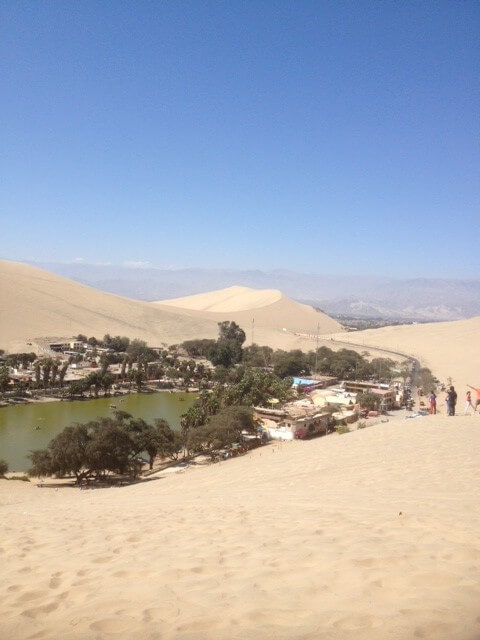

Sandboarding – for me – was up there with seeing Machu Picchu. The city of Huacachina was amazing on its own, being an oasis in the middle of towering sand dunes, but the main attraction in the city was the sandboarding.
Sandboarding is basically sliding down massive sand dunes on a board similar to a snowboard. Prior to sandboarding in Huacachina, Peru, I had sandboarded in Florianopolis, Brazil, so I believed I knew what to expect. Even with that experience, I was still blown away by the sheer size of the dunes in Peru compared to the dunes in Brazil.


For around USD $25 per person, we were able to take a sandboarding/dune buggy tour. Our guide drove us up several dunes then we slid down dunes with the provided boards. We weren’t allowed to stand up on the boards while sliding down because it was ‘dangerous’ but still, words can’t describe how much fun it was to slide down a massive sand dune.
Sandboarding is a must do activity if you go to Peru. Read more about my experience sandboarding in Huacachina, Peru here.
Sandboarding Tours:
- Tucan Travel arranged our sandboarding tour for us.
- You can also do sandboarding tours in Huacachina through Peru Adventure Tours.
- Huacachina.com also offers sandboarding tours.
2. Trek the Inca Trail


Unfortunately, I didn’t get to trek the Inca Trail, but several others in our tour group got to and said it was one of the best experiences they had in Peru. (I did the Lares Trek instead, which also involved hiking along stunning trails.) The classic Inca Trail trek takes 4 days and requires travelers to hike in high altitudes. It’s all worth it though when you enter the Incan ruins of Machu Picchu via the Sun Gate.


The high altitude can made trekking challenging, so check out my blog post on 5 Tips to Adjust to High Altitude.

Visit this page to find out more about what to pack for trekking the Inca Trail and more information about what to pack when visiting Peru.
I also found a helpful resource about the Inca Trail itinerary at IncaTrail.info. The article goes over some information about what you do on each day of the trek.
One thing you should be aware of when planning is that you will need a permit to trek the Inca Trail. The reason we didn’t do the Inca Trail was due to us not having a trail permit. Since our decision to go to Peru was a last minute one, we weren’t able to get the permits as they sell out in advance :(. Make sure you don’t make that same mistake.
Here’s some information about Inca Trail permits from the Tucan Travel website:
In order to preserve the Inca Trail Trek and its surrounds, the Peruvian authorities currently cap the number of Inca Trail trekking permits to 500 per day, which includes trekkers, guides, porters and other support staff. Permits often sell out several months in advance and you must book well ahead to secure your place, particularly if you want to trek in the high season between June and August.
Read more about permits here.
How to do this tour:
- Tucan Travel arranged our Lares Trek (we didn’t do the Inca Trail)
- There are tons of tour operators which offer Inca Trail tours other than Tucan Travel. I’ve narrowed down them down to just a few:
If you’re even more adventurous, you may want to try the Inca Trail Marathon to Machu Picchu tour which is offered by Andes Adventures. It starts in Cusco where travelers will be able to take a day tour, then begin their run which eventually ends in Machu Picchu. The tour consists of running along mountainous trails for a full 26.2 miles – not for the faint of heart.
3. Visit the Presidential Palace in Lima

The Presidential Palace (Palacio de Gobierno) is home to the Peruvian President and is located in the center of Lima. While visiting Lima, we didn’t go inside the palace, but we got to see the changing of the palace guards, which happens every day at noon. I guess you could say it’s the Peruvian version of the Changing the Guard at Buckingham Palace. The changing of the guards was fascinating and some of the guards had some pretty intimidating automatic weapons.
No tickets/arrangements are required to watch the changing of the guards, although you might want to show up early.
The Presidential Palace was first constructed 1535 and has been renovated several times since. We weren’t able to go inside the palace and I believe the only way to take a tour inside the palace is if you arrange it through the palace’s office, which is understandable since it is a working governmental building.
How to do this tour:
- It’s free to see the changing of the guards outside the Presidential Palace.
- The changing of the guards takes place every day at noon.
- The Presidential Palace is located here.
4. See the Pre-Incan mummies at the Chauchilla Cemetery


Thanks to the desert climate of Nazca, Peru, some mummies have been preserved so well that they “still have hair and the remains of soft tissue, such as skin” in the words of Wikipedia. Located in the Chauchilla Cemetery in Nazca, Peru these bodies are said to have been buried in 200 AD, almost 2000 years ago. Pottery from the ancient Nazca civilization can also be found in the cemetery.
On our way to the Nazca Lines, we stopped by the Chauchilla Cemetery to take a tour of the site and see mummies. I’d have to admit, some of the mummies were quite creepy, but nonetheless it was an interesting experience.


Read more about the Chauchilla Cemetery and the mummies here.
How to do this tour:
- Tucan Travel organized this tour for us.
- You can find Chauchilla Cemetery tours offered by Mystery Peru.
- Peru Dream Travel also provides tours to the cemetery.
5. Fly Over the Nazca Lines

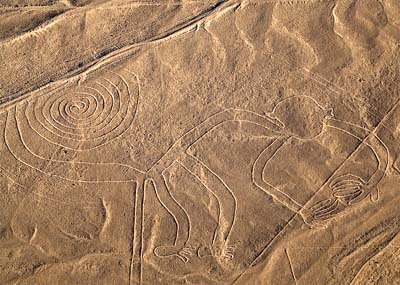
Drawn in the sand by the ancient Nazca people between 400 and 650 AD, these massive drawings, now a UNESCO World Heritage site, depict animals and shapes. Because of the climate, these lines have been miraculously preserved over the years. Till today, nobody knows what the drawings mean or what the purpose they serve. I’m guessing they’re an elaborate scam devised by the Peruvian tourism board… 😛


Drawings include:
- The Hummingbird
- The Spider
- The Astronaut (my favorite)
- The Monkey
- The Hands
- etc.


Since these drawings in the sand are massive, you can only really recognize the animals when you’re looking at them from above. The best way to get a glimpse of these sand drawings is by taking a 20 minute ride in a little plane which circles above the drawings allowing you to take pictures of the lines.
If you aren’t too keen on the flight, you could also pay to climb up a viewing tower, but the views aren’t nearly as good as those from a plane. You can only see 3 of the sand drawings from the tower and it’s hard to differentiate the lines.


I didn’t have the best experience flying over the Nazca Lines, and you can read about that here: Nazca Line Flight: 20 Minutes of Torture. That’s not to say that you shouldn’t do the Nazca Line flight. It’s an amazing experience, just remember to go with an empty stomach.
Note: Although most things in Peru are inexpensive from an American perspective, the Nazca Line Flight is comparatively pricey since it involves flying in a small plane.
How to do this tour:
- Tucan Travel set up and connected us with tour operators for the Nazca Line Flight at an added cost.
- Alas Peruanas offers Nazca Line Flights ranging between $100 and $270.
- The tour company Nazca Flights also has flights.
6. Eat Cuy


While this isn’t really an ‘attraction’, it is something that you definitely should try when visiting Peru. Cuy is guinea pig, a traditional food in Peru and Ecuador. While it may seem bizarre to eat an animal that we usually think of as a pet, I tried it and thought it was pretty good. Since it is a relatively tiny animal, there isn’t much meat.


Cuy is either fried or roasted and can be eaten by itself or with corn or rice. It can be a bit unsettling to look at the dead animal with it’s arms sticking out and mouth wide open, so just take a bite into it with your eyes closed. 🙂 It’s not too hard to find Cuy because it is served in many restaurants and by street vendors. I’d recommend to avoid the over priced touristy restaurants and look for Cuy in local hole-in-the-wall restaurants/stalls.
7. Visit Machu Picchu


You can’t go to Peru without visiting Machu Picchu. There are several ways to get to Machu Picchu, by train (Peru Rail), via the Inca Trail, or by bus.
Once you make it to the ruins, you will not be disappointed. We toured Machu Picchu with a guide, which was helpful since he was there to explain about the ruins and answer our questions. The ruins were amazing and it was hard to believe that it was all made by hand and that was hidden from humans for so long.
How to do this tour:
- Machu Picchu tours are frequently combined with Inca Trail tours.
- We visited Machu Picchu through Tucan Travel and were accompanied by a really informative guide.
- There are many companies which offer Machu Picchu tours and some of the most popular are Virgin Vacations, Southern Explorations and Detour Destinations.
8. Walk on the Floating Islands of Lake Titicaca

It’s a weird sensation to walk on the squishy sponge-like floating islands, knowing that you’re actually on a floating platform made of plants. These floating islands in Lake Titicaca are made completely of reed by the Uru people. Originally, they lived on the islands for defensive reasons, but nowadays, tourists from around the world visit the islands.

We traveled by boat from Puno to visit these floating islands and were able to see the living conditions of the native Uru people. While on the island, we watched a demonstration of how the islands were made of reed and got to see the traditional huts. There are also reed boats which you take tours in.
How to do this tour:
- We visited the floating islands with Tucan Travel.
- Loki Travel provides tours to the floating islands in Lake Titicaca.
- Peru Travel Now also offers tours to the floating islands.
- Note: This tour is frequently combined with the Amantani Island homestay.
9. Homestay in Amantani Island of Lake Titicaca


Like the floating Islands, Amantani Island (a real island) is located in Lake Titicaca, highest navigable lake in the world. Through our Tucan Travel tour, we were able to do a homestay on the island with a local family. During our overnight stay on the island, we experienced what it was like to be completely off the grid since the island had limited electricity. Even without using electricity, were were still kept busy with many activities like hiking to the top of the island and getting water at the well.
Read about my full Homestay experience in Lake Titicaca.
How to do this tour:
- A lot of times, the homestay experience is combined with visiting the Floating Islands. In our tour with Tucan Travel, we visited the floating islands then continued by boat to Amantani Island later in the day. Our Amantani Island homestay tour was done through our main Overland Tour with Tucan Travel.
- You can also this tour through companies like Mystery Peru.
- G Adventures also offers Amantani Island homestays.
10. Visit the Sacred valley

The Sacred Valley is one of the most visited destinations in Peru and is located outside of Cusco. During the prime of the Inca civilization, the Sacred Valley was at at the heart of the empire due to its fertile land. Corn and other crops were grown in the area.
We took a tour from Cusco to visit the Sacred Valley. The views of the valley are stunning and I highly recommend visiting if you are around Cusco.
How to do this tour:
- This tour was included in our Tucan Travel overland tour of South America.
- I’ve also seen that the tour operator Llama Path has tours to the Sacred Valley for USD $20 per person from Cusco.
- SAS Travel also has Sacred Valley tours for USD $25 per person.
- You can also a tour to the Sacred Valley through Apus Peru, a sustainable adventure tour company.
Featured image Photo Credit
Find out everything you need to know about Peru – get our guidebook…

What are your recommendations? Leave a comment below.
Pin this:

