
If you randomly asked people which country they’d like to visit in South America, your likely answers would be Argentina, Brazil and Peru. Suriname rarely makes the list. In 2018, Argentina had 6.94 million visitors, followed by Brazil at 6.62 million and Chile at 5.72 million. So where does that leave Suriname?
Suriname had 279,000 visitors. This is good news for those who like visiting the path less trodden. Not sure where to begin? Here’s a travel guide to Suriname that will help you plan your next adventure.
Contents
- Where is Suriname?
- What language do they speak in Suriname?
- Weather in Suriname
- When to Visit Suriname
- How to Get to Suriname
- What to Do in Suriname
- What to Eat in Suriname

Where is Suriname?
Suriname is on the northern coast of South America bordered by Guyana to the west, French Guiana to the east, Brazil to the south and the Atlantic Ocean to the north. Once known as the Dutch Guiana, this former colony of the Netherlands is one of the smallest countries in South America.
The estimated population is 490,000, and it is believed that the first group of inhabitants were the Taino people called Surinen. Today, the main ethnic groups in this multicultural country are Indian (37%), Creole (31%), Javanese (15%), Maroons (10%), and Amerindians (2%). The Javanese population is due to the large number of migrant workers from Java island (Indonesia) during the colonial times. There have also been a large number of Chinese immigrants to the country in recent years who have set up shops, markets, and restaurants.
What language do they speak in Suriname?
Unlike the majority of South American countries, Spanish is not spoken in Suriname. Instead, Dutch is the official language. Suriname was a Dutch colony until 1975, thus the reason for the Dutch language.
What’s the weather like in Suriname?
Sitting at 276.46 miles north of the equator, Suriname is hot and humid. The country enjoys high temperatures throughout the year, and the seasons are divided into wet and dry seasons.
The wet seasons are December and January and April to August. The dry seasons are from February to March and from August to November. The wet seasons are a little cooler than the dry seasons. And November is the hottest month with temperatures way over 90 degrees Fahrenheit (around 32 degrees Celsius).
When is the best time to visit Suriname?
It’s best to avoid the intense wet season from April to early August. That’s when Suriname experiences monsoon conditions, with widespread torrential rains and severe thunderstorms. These conditions may result in difficulties when traveling into the forests, and other remote areas as roads are not well developed in rural Suriname.
Most visitors prefer the dry season in February and March or the not so intense rainy seasons from December to January.
Whatever season you’re traveling in Suriname, always bring a raincoat.
Do you need a visa for Suriname?
U.S. citizens, check the U.S. Department of State’s website for information regarding visas.

How to get to Suriname?
Most travelers and tour companies combine Guyana, French Guiana, and Suriname on their itineraries when traveling to this part of South America. But that’s not necessary if you just want to visit Suriname.
To get there from the United States, most stopovers are in Miami, Port of Spain, Panama City (Panama), Georgetown, Aruba, and Curacao.
Surinam Airways flies direct from Miami to Paramaribo every Friday and with connections all other days. Surinam Airways also offers direct flights from Amsterdam, Aruba, Curacao Georgetown (Guyana), and Belem (Brazil). Check their website for details.
Here are a few sample flights to Paramaribo:
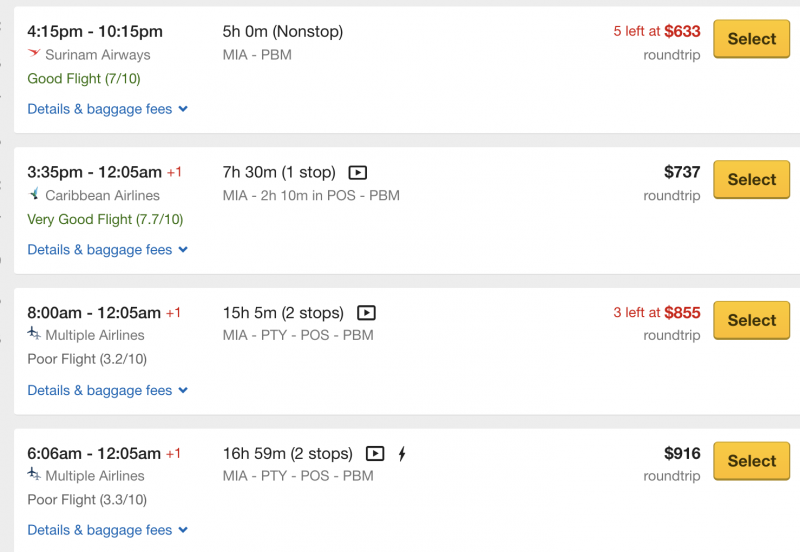
1. Miami to Paramaribo (PBM) with Surinam Airways or Caribbean Airlines. Friday is the best day to travel to Paramaribo from Miami if you prefer a direct flight with Surinam Airlines.
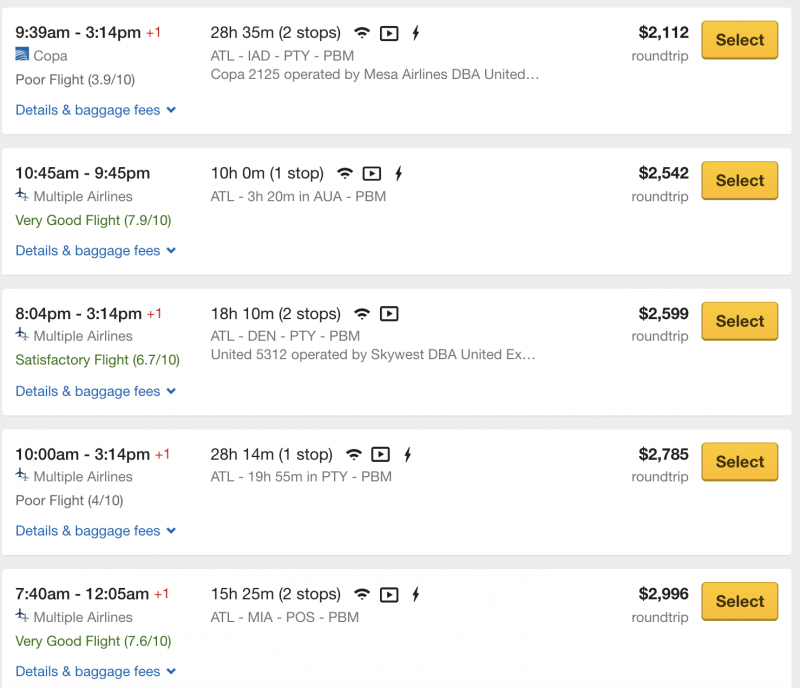
2. Atlanta to Paramaribo with COPA with stops in Houston and Panama City (Panama) or with Delta and Surinam Airways via Aruba.
3. We bought a round trip ticket from NYC (JFK) to Port of Spain (POS) with JetBlue and a separate round trip ticket with Surinam Airways from Port of Spain to Paramaribo (PBM). It was cheaper than buying a round trip ticket from JFK to Paramaribo. If you get separate tickets, you can also visit Trinidad before continuing your journey to Suriname. We stopped at Port of Spain for a night and returned for 2 more nights after our visit to Suriname and our airfare was cheaper this way than purchasing a JFK to PBM flight.
Play around on Expedia or other websites to get the best combinations and deals.
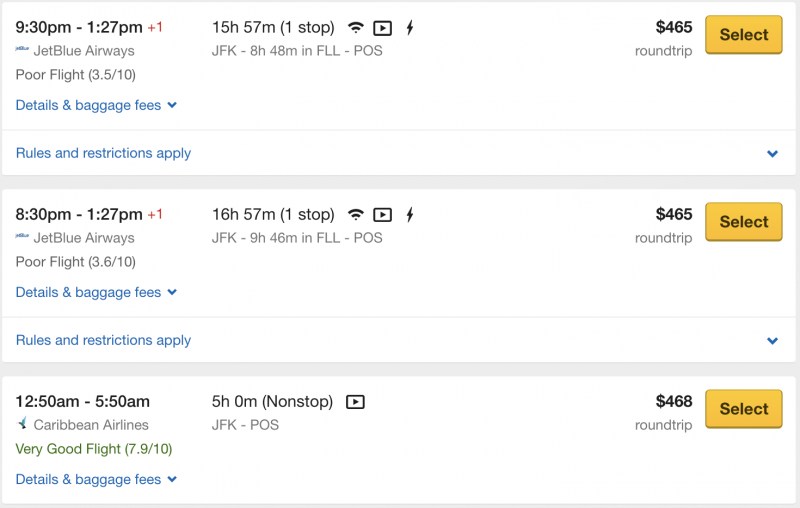
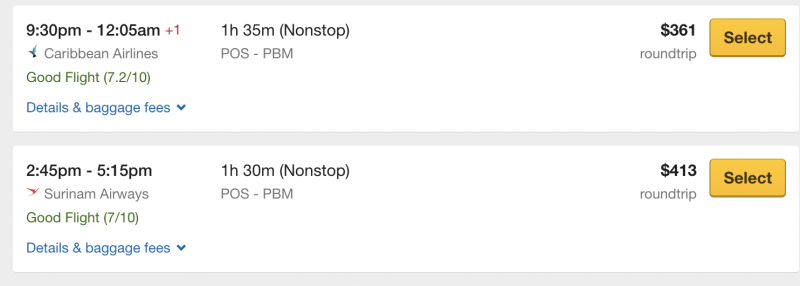
If you get a round trip ticket without stopovers, the price will look like this on the same day, with long layovers:
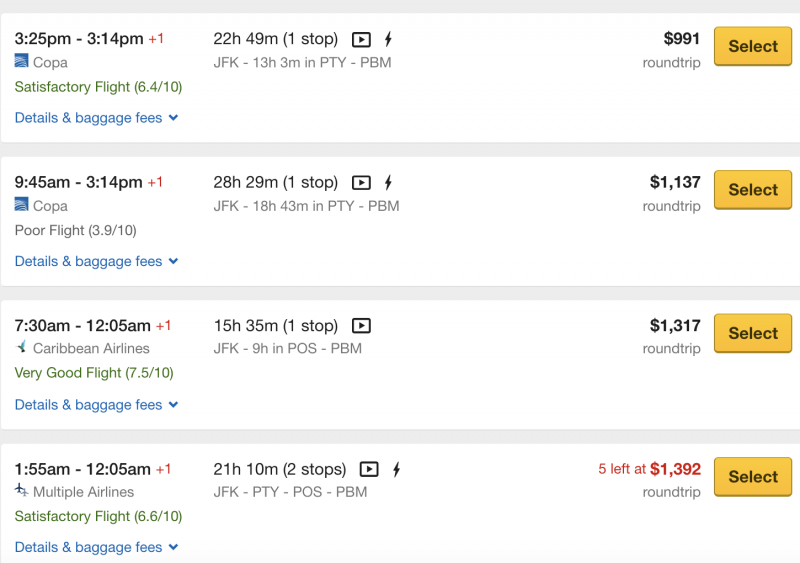
NOTE: It’s important to make an arrangement with your hotel for transportation from the airport to your hotel as ground transportation services are limited at Paramaribo airport.
What to Do in Suriname
Paramaribo is the capital and largest city in Suriname. Located by the Suriname River, this city of 250,000 people is a fascinating place that has an unusually large concentration of wooden buildings. On the outskirts, there are tropical forests, mangrove swamps, rolling hills, muddy rivers, and wild animals waiting for visitors to explore. There’s a variety of things to do and see in Suriname. Let’s start with Paramaribo.
What to do in Paramaribo Suriname
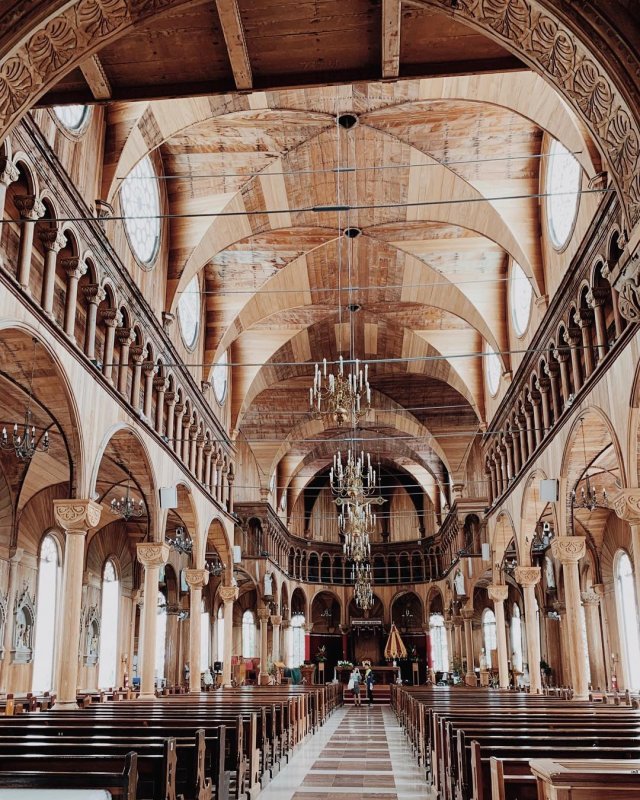
1. Peter and Paul Cathedral
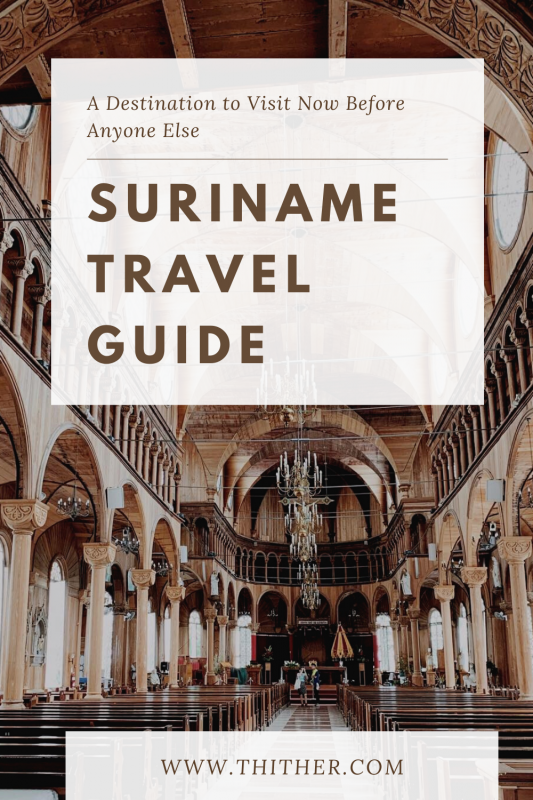
Check out the largest wooden church in the world, the Peter and Paul Cathedral. This Roman Catholic Church was built in 1885. It’s Paramaribo’s famous landmark and is a hot spot for tourists to visit. Make sure you dress appropriately. From experience, workout tights and shorts are a no-no.

2. Fort Zeelandia
Fort Zeelandia, the most important historical site in Suriname was started by the French in the 1600s, expanded by the British, and completed by the Dutch when they took possession. Fort Zeelandia was an important trading post for the Dutch until 1975 when Suriname became an independent state. Besides its rich history and place of torment, Fort Zeelandia is one of the best places for views of Suriname River.
Fort Zeelandia is now a museum known as Stichting Surinaams Museum, showcasing artifacts and relics from the colonial times.
3. Central Market
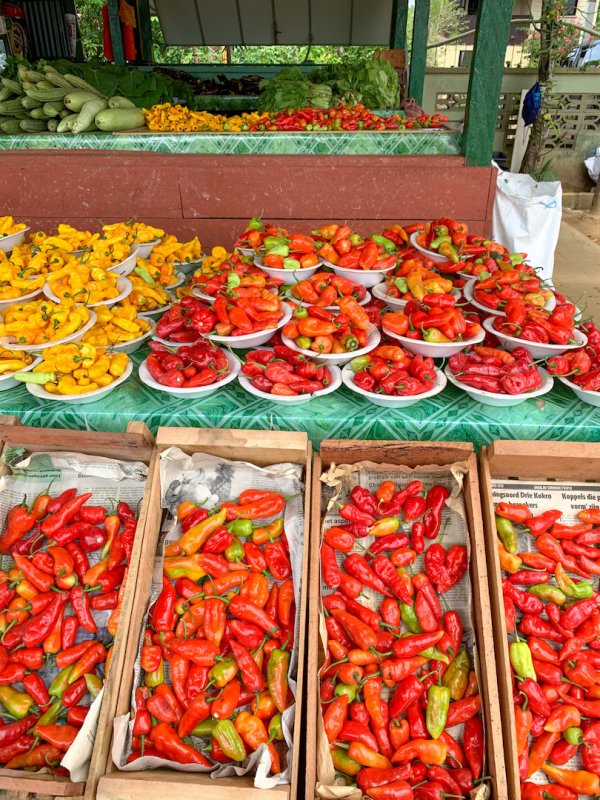
The Central Market has everything from fresh vegetables, fruits, meat, fish, clothing and shoes to all types of spices and Javanese snacks. There’s a section called the witch market too where Maroon ladies sell herbs, bones, and potions.
Central Market is the place to people watch, meet locals and learn about life in Suriname’s biggest city Paramaribo.
4. Independence Square and Streets with Historic Wooden Houses
Independence Square is just a few minute’s walk from Suriname River (the main waterfront of the city) and is home to the Presidential Palace, gardens and historical monuments. Check out the streets lined with historic wooden houses along the waterfront and other parts of Paramaribo’s historic inner city. Walking on these streets is like stepping back into the 17th and 18th centuries because the street plan is just like how it was originally planned according to UNESCO. The historic inner city was added to the UNESCO World Heritage List in 2002.
5. Jodensavanne
Jodensavanne, in the south of Paramaribo is a place to learn about Jewish history in Suriname. This was the first Jewish settlement in the Western Hemisphere. In around 1630, Sephardic Jews fled the Spanish conquistadors and settled in Paramaribo until the 1830s when a massive fire destroyed almost everything there. What is left now are the ruins and graves. Today, the number of Jews in Suriname is only in the hundreds.

Neveh Shalom Jewish Synagogue 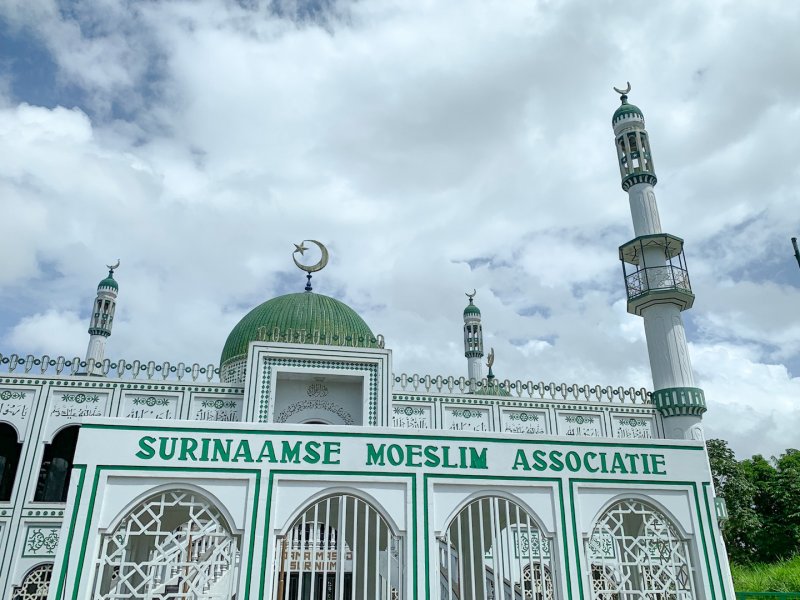
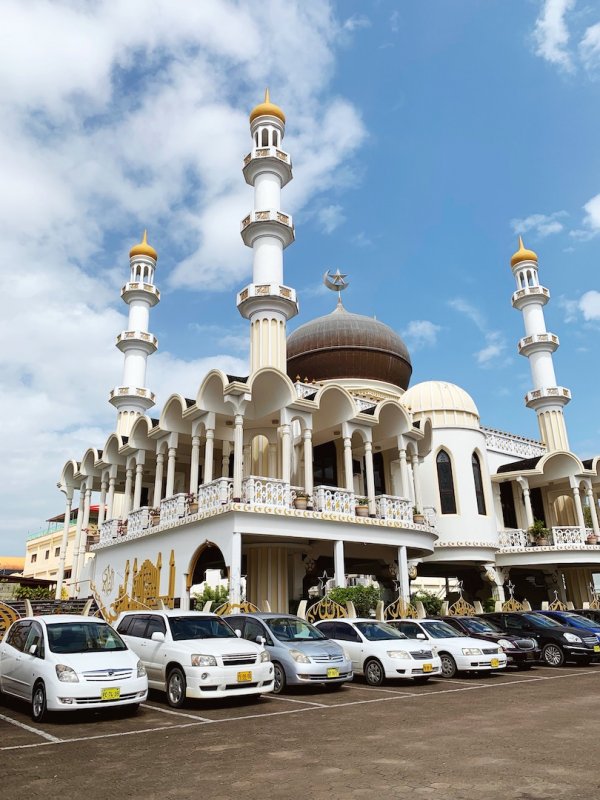
Suriname City Mosque
6. Religion in Suriname: Suriname City Mosque and the Neveh Shalom Jewish Synagogue Paramaribo
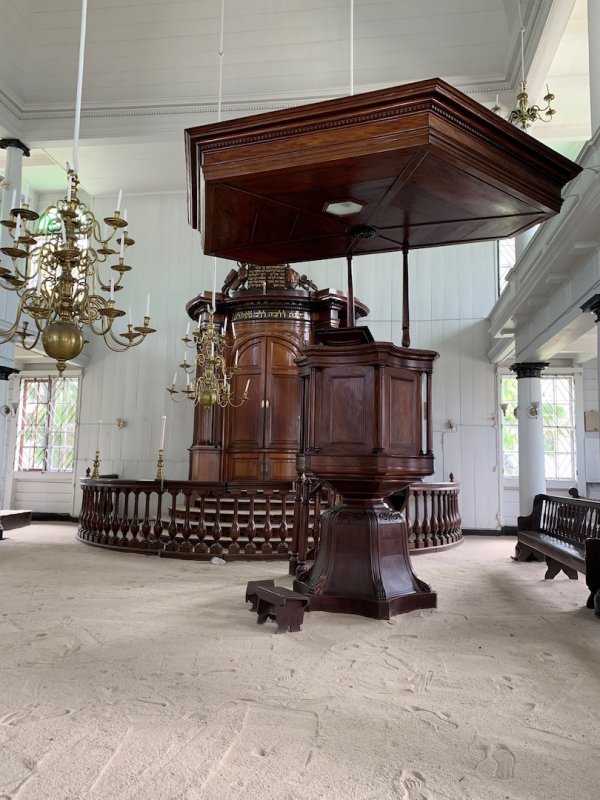
Imagine seeing a mosque located next to a synagogue? You can in Suriname. These two religious institutions are located side by side in Paramaribo. Neveh Shalom Jewish Synagogue was built in 1835, and the city mosque was completed only in 1984. You can visit both religious institutions. In the synagogue, the entire floor is covered in sand.
7. Sunset and Dolphin Tour
One of the most popular afternoon tours from Paramaribo is a sunset and dolphin tour. Take a three-hour boat ride on the river with a chance to see Suriname’s freshwater dolphins and catch a glimpse of a beautiful sunset. Tours are provided by Waterproof Tours Suriname for 27.50 Euros per adult and 22 Euros for children under 12. Snacks and three drinks per person are provided on the boat. The tour company claims that you’ll have a 98% chance of spotting dolphins when on the tour.
Waterproof Tours Suriname also organizes sea turtle evening tours. The nesting season is from February to July.
8. Paramaribo Bus Tour
For the best city tour, join Orange Suriname, a tour company that offers the best-selling Paramaribo bus tour. This 3-hour tour departs at 9:30 am. It’s 20 Euros per adult and 22 Euros per child.
The tour includes passing by Abra Broki, the low and middle-class residential area, and crossing the Jules Wijdenbosch Bridge to the Commewijne district, located on the right bank of the river.
What to Do Outside of Paramaribo
About 80% of Suriname is covered with nature reserves, untouched land, and forests. Here are some of the places you should add to your list if you like nature:
Galibi Nature Reserve
Located on the northeast of Suriname, close to the French Guiana border is Galibi Nature Reserve. It’s one of the must-go places for those who want to discover the fauna and flora of Suriname. There are a few Amerindian villages in the reserve and you have a chance to learn about their culture and also to help out by buying the local handicrafts.
Galibi is home to leather turtles. These turtles come between February and August to lay eggs.
Brownsberg and Stone Island
Go fishing, hiking, canoeing, or bird-watching in Brownsberg and Stone Island. Stone Island is a peninsula, located by the reservoir. It’s the best place for canoeing, swimming, fishing, and sun-bathing. Brownsberg is the place to discover more of Suriname’s rainforest, the hundreds of birds, and an assortment of animals. You can view a typical tour itinerary to Brownsberg and Stone Island on Suriname’s official travel site.
For more adventures, the Suriname Tourism board listed the following tours on their site:
- 9 days Brokopondo kayak tour
- 5 or 8 days Kasikasima Expeditions
- 4 days tour at Pingpe Jungle Resort
What to Eat in Suriname
Suriname’s food is a reflection of its multi-ethnic groups and influences from the past and present, including Dutch, Indian, Javanese, Creole, Jewish, and Chinese.
Find roti in Indian restaurants, nasi goreng and nasi campur in warnings (Javanese cafes), and Creole food in open-air cafes along the riverfront. To get the best Indonesian food, go to Blauwgrond, the Javanese district in Paramaribo. You can find rotis in almost every street corner in Paramaribo.

Here are 7 Surinamese foods you should try:
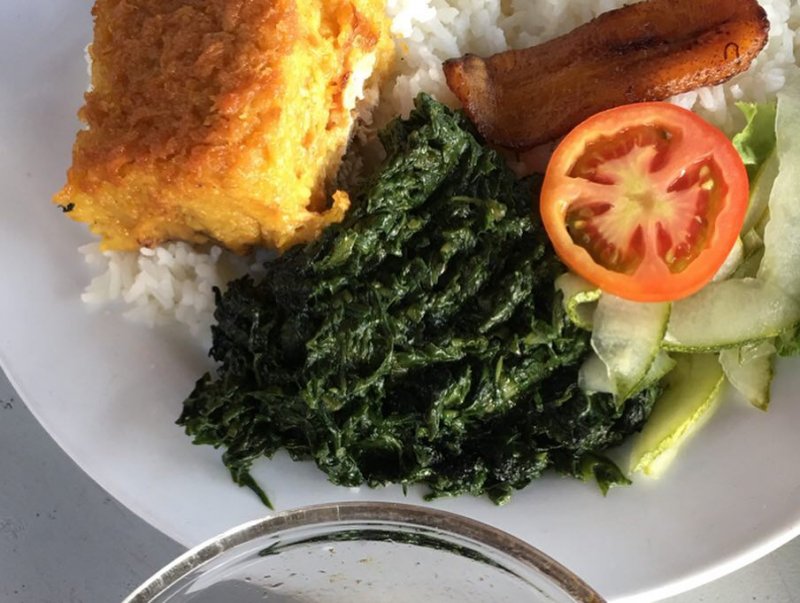
- Moksi Alesi – mixed rice with meat and vegetables. It’s a Creole dish that you can try at De Gadri Restaurant by the waterfront.
- Pom with vegetables and rice – a Surinamese-Jewish dish of baked root vegetable and chicken at De Gadri Restaurant by the waterfront.
- Roti – use your hands and eat roti with all sorts of curries. Try it at Roopram Roti on Zwartenhovenbrug Straat.
- Nasi rames – a variety of small Indonesian dishes on one plate. Get it at one of the Javanese restaurants in Blauwgrond district.
- Broodje pom – cheap Surinamese sandwiches made of bread roll, chicken, and pomtayer (a type of root vegetable.)
- Bakabana with peanut sauce – fried plantain of Javanese origin.
- Saoto soup – chicken soup of Javanese origin.
And don’t forget to pair your food with a local Parbo beer.
Hello, I love your post as someone from Surinam. Just one thing, you referred to Javanese cafes as warnings. But this is incorrect, they are called warungs. Just wanted to let you know!
Kind regards